The world was so focused on “Don’t look up!” that, as a result, it was seeing nothing at all. That’s when this photographer grabbed the reliable AE-1 with whatever film was already loaded.

People sometimes make pinhole cameras. Those are touted as a way to “watch a solar eclipse” without frying one’s eyeballs or sautéeing one’s brain. Certain literal-minded schoolkids (we confess) found it anti-climactic compared to the excitement that precedes such primal events. And now, as an adult with lowered expectations? It’s pocket-sized shadow play, the real deal is outside our pinhole view.
Our weathered, old farmhouse stood in a small cluster of trees too humble to call an oasis. A few acres of alfalfa lay to the left, and a million square miles of unbroken desert stretched to the right.
The residents would fire up a massive old irrigation pump to fill the cistern and water the trees. When they pulled the power lever with a loud snap, cold water geysered out of a 12″ pipe. They would run alongside the flow, shovel in hand, to ensure the ditch didn’t fail and flood the house. It was fun to follow the water, barefoot, cool as goosebumps in the middle of the Mojave.
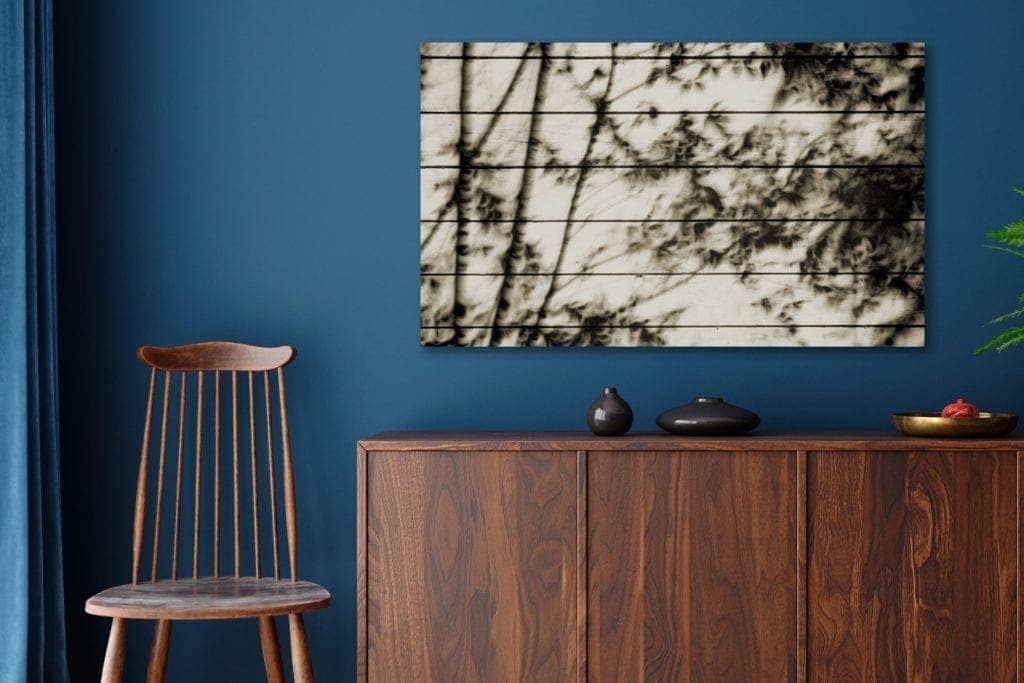
That weekly chore kept the trees alive. It also maintained the humans’ livability meter somewhere between “Mostly Bearable” and “Ask Again, After Sundown.” In the harshest environments, it is not possible to ignore the underpinnings to life as we know it.
The eclipsed sun conspired with every twig and leaf to make them a million pinhole cameras aimed at the house’s blighted and weather-bitten clapboards. The trunks and twigs are overlaid with light-crescents, images of the eclipsed sun at the moment the photo was taken.


I love this piece on my office wall. Makes me happy every time I see it.